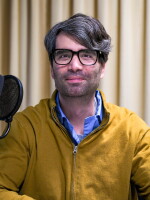
Mark Munger: I'm Mark Munger, and this is a Manager's Special. Broken Kettle Grassland Preserve, Iowa's largest remaining prairie, is northwest of Sioux City on Highway 12, managed by The Nature Conservancy. The land hosts a dynamic ecosystem of flora and fauna, including a herd of bison that can number around 250, depending on the year. Knowing just how many, however, is no small feat. Bison don't come when you whistle. This week, The Nature Conservancy in Iowa rounded up as many bison as they could in order to count, vaccinate, weigh, record, and otherwise observe the health and state of the herd. The Nature Conservancy in Iowa's Zach Hemond walked me around the operation. A generator whined as the bison made their way through a system of heavily reinforced gates into a chute.

Zach Hemond: So right now we rounded up the bison, and now we're sending them through a chute, so we could get the vet work on them, so we can make sure they're vaccinated, everything's healthy, and then we're either sending them back to our preserve in a herd, or we're gonna send them either to a different growing herd. So we're sending some to Iowa, Nebraska, and South Dakota to help other herds grow. We have roughly 200 around here. With the drought, we've been lowering our numbers. We usually have a little more, probably closer to 250.
Before settlers, we had there probably 30 million bison that roamed the U.S., and then we've got that down to such a low numbers through hunting, and they're just such a steward of the land. So they're gonna eat the grass, they're gonna fertilize, and then they're gonna keep the trees down by rubbing up against the trees. So it's just kind of like they're one of our best management tools for keeping prairies and the tall grass prairies, which is such an important ecosystem for birds and animals and wildlife coming through this corridor. So they're just help. We are managing the land, but it helps us to have bison that will help do a lot of the work for us, and we just help them out.

The thing is, bison don't really know... they don't know the concept of that they can't go through something, so everything's reinforced well. But even just making them get through the chute, they're running into the fence. We lost some staples on our fencing, so I have to go out and repair.
Mark Munger: Once the bison were weighed, vaccinated, and recorded, they were sent back into the temporary holding pens. While I was there, a few were also routed into the waiting trailer of

Cole Oltmanns: Cole Oltmanns. I live south of La Mars, so I am starting a cow calf operation, so these animals will go to expanding my herd. Well, I've always been, I guess, interested in the animal. It's a neat animal. It's a native animal, but I guess the thing that really drew me to him was a podcast in 2021, and when I heard that, it is I was like, "This is what I'm meant to do."
Yeah, it took me four years before I got my first animals, so yeah, this is my second group of animals I'm acquiring. So yeah. Yeah, still feeling like this is the right direction I'm going in. It's, it's tough. It's a learning experience, but it's all part of it. I mean, they're a wild animal. You never, never know what they're gonna do.

Mark Munger: Did you grow up with cattle, or did you like did you have?
Cole Oltmanns: Yeah, I grew up around cattle and hogs. So this is completely different ball game. Just hands off. You're not handling them like you do cattle and hogs. So I guess the biggest thing I enjoy is just watching them be them out in the pasture and seeing the small calves run around, play with each other, and just how they react with, or I guess act with one another. And it's just a different experience. And like, not many people grow up with this. So if I can give this to my kids and show them the world of bison and how awesome the community is. I hope they... I can pass that on to them sometime.

Mark Munger: You've been listening to the rumpus of the buffalo roundup at Broken Kettle Grassland Preserve. This is a Manager's Special from Siouxland Public Media. I'm Mark Munger. Coming up, the Sioux City Symphony Orchestra's Ryan Haskins talks with Steve Smith about the upcoming concert, and we hear a nightingale song that is over 100 years old.