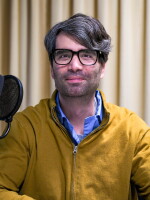
Mark Munger: One state senator who did maintain her seat is Democratic Iowa State Senator Catelin Drey. The incumbent for Iowa Senate District One defeated her Republican opponent by 15 points. In the special election last year, she won the seat by 11 points against the same opponent. Coincidentally, that seat had been won by Drey's Republican predecessor by the same margin in 2022. Overall, shifting the vote 26 points.
Catelin Drey: To me, this is like still the last year and a half of my life has been absurd, right? If you would have told me two years ago that this is what I would be doing, I would have said, "That is hilarious. Probably not." I had a great job that I loved, people that I worked with, who I adored. I had a very comfortable existence, right? But I also knew, when I looked around, I was like, "This we can do better than this."
And so, to go from deciding to run in a special election, nomination day to election day was 47 days. From the day that I was elected to the date that I was sworn in was 20... 21 days. I think I'm doing the calendar math right. Between the time that I was elected and starting session, received a uterine cancer diagnosis, an... let's see, session started on January 12. Surgery was January 27. So is that 15 days from the time session started to the time that I had a hysterectomy? And then returned to the Senate floor seven days after surgery. And then the rest... I mean, it it's so blurry, but there are these like peaks where it's like, oh, another absurd thing has happened. Another absurd thing has happened.
Three three weeks before election day, I was down for a day with food poisoning. The day before election day, I was bitten by a dog on my first door of the day. Had to go to the emergency room and get an updated tetanus shot.
Mark Munger: Sorry, I'm not laughing...
Catelin Drey: No, it is absurd and it is funny because if I don't laugh, I'll just be sitting here like, what the right? Because all of it is absurd. My the entirety of my existence over the course of the last 18 months has been absurd, and so the idea that I am Senator Drey is also absurd to me. In some moments where I'm like, absolutely not, this is crazy.
I am pleased to report one: I am cancer free. Right, I got the treatment that I deserved and needed. I didn't have to do any chemo or radiation. I am completely healthy in that regard. I am pleased to report that as of right now, I do not have rabies. I have started the rabies series. I learned a lot about what... that it's state law in Iowa that a dog bite needs to be reported to animal control, and then the the the following protocol is that if the that animal does not have its shots, that you also get to get the rabies series, which is quite involved.
Mark Munger: That's such a good example of of, sorry... that's such a good example of how costs have to be subsidized. Like either the dog is vaccinated,
Catelin Drey: yes,
Mark Munger: or you or you are paying for it, and and that is like all government. You know, where do the costs go? Like, does the cost go to...
Catelin Drey: and the emergency room. When you show up, they have to treat you.
Mark Munger: Yeah.
Catelin Drey: So had I not had insurance, who pays for that then, right? Right.
Mark Munger: And that is...
Catelin Drey: People with private insurance, their rates go up.
Mark Munger: There it is.
Catelin Drey: Politics is gonna do you.
Mark Munger: Iowa State Senator Catelin Drey, who retained her seat this past Tuesday in the midterm election. You're listening to a Manager's Special on Siouxland Public Media. I'm Mark Munger.
One of the failures of conversations after elections, I think: Big conclusions following elections,
Catelin Drey: Oh yeah!
Mark Munger: Ultimately it seems like we keep failing to understand why people chose what they chose, or why the vote turned out the way it turned out. If you if you just said people voted because the cost of living was too high, that would be true of 2024. That went an entirely different way.
Catelin Drey: Right?
Mark Munger: Is is it easier than we think it is? Like, are people voting for something that we're missing? That because it's right in front of us, are we misinterpreting what you know? What their motivations are?
Catelin Drey: I think the to your point, the simplification or the distillation of people's feelings or fears or hopes even into the economy is.... It's too simple, right? Because when I show up at someone's door and I say, "Hi, my name is Catelin Drey. I'm your state senator. I understand what it's like to get a scary medical diagnosis and be concerned about whether or not you can keep the lights on while also getting the treatment that you need."
And people say, "Wow, that resonates with me."
Or I can say, "I have a kid in school, and I understand what it's like to try and get to work on time and get your kid to school on time and make sure that they eat a vegetable every once in a while."
It's like we stopped understanding that voters are people. That like we've simplified the electorate into data points, and we are not data points. We're people, And the frustration of feeling unseen and unheard and disrespected in a lot of ways, right?
When we simplify people's feelings into those data points, we miss so much of the minutiae in our lives, and and we miss the connective tissue that makes us neighbors or friends, or maybe not friends, but people who are truly all striving for something similar. Right? We want a safe place to sleep at night. We want a full belly for us and our kiddos. We want the opportunity to have a good job and make a difference and retire safely. And those things are quite common, you know, regardless of of the stripes that you wear in your daily life.
Mark Munger: That does seem to come out... not to point to data, that does seem to come out in this election, locally, you know, you saw mixed tickets. It's maybe as the orders of magnitude increase, and you get further and further away, you don't know the person. You don't feel you have access to them.
Catelin Drey: Right.
Mark Munger: You get form responses when you send them an email.
Catelin Drey: Or you get a 30-second snippet about the. You know, like we. I think candidates, too, are also distilled, right? Like, I became the regular mom who got cancer. And that's not... I mean, that is true of me, right? But that's not the entirety of my personality or policy offerings or anything.
And so, yeah, it is. It is harder to know your candidates, but I also think the money that exists in our ecosystem of politics right now makes it incredibly hard to filter out the noise, like to scale. And this is this is a challenge, even in a in a state house race, right to scale yourself to the 62,000 people that you represent requires a significant social media presence.
In my case, it requires you know considerable ad buys, which is not the best way to do democracy in a 30-second TV commercial or a 15-second YouTube ad, right?
And, so it is, I think, imperative that we start to reevaluate the amount of money that is spent, so that we can get back to meetings in old union halls, and having people that show up for a public forum, either before the election to get to know a candidate, or you know after as an elected. Right?
I went to forums before I was ever even considering running for office, because I wanted to know that the people who represent me were being held accountable for the decisions that they made or the positions that they hold. And I would hope that people who voted for me and those that didn't will continue to stay engaged in the process, because it's not just showing up on election day or the 20 days of early voting beforehand, right? We need you to stay engaged, and it's okay to tap out for a minute and, you know, catch your breath. But policy is not made on election day. Policy is made when we start session in January, and I want to be held accountable to the things that I said at someone's front door about what I will do to help healthcare and the cost of living and prescription drug costs and you know property taxes and all of those things, right? And we do better when there are more voices involved in the process.
And to your point, I think that's why people split their ticket. I said quite often that last session the best idea was not winning, because it was all top down, right? We had policy that was coming from the governor's office, and was basically forced to be implemented, regardless of even what the majority party wanted. And that's not how the best idea wins when a third of people are shut out of the conversation. So, I'm hopeful that we will be able to have more productive conversations now that we have, you know, a quote-unquote divided government. But I think the better way to say that is we have a more balanced government, especially in the state of Iowa.
Mark Munger: Iowa State Senator Catelin Drey on today's Manager's Special. I'm Mark Munger. A quality that seems to have made Senator Drey successful in a county where Democrats are not assured to win, is her obvious love of deep canvassing. But she has also created an ease and personableness online that has captured the attention of folks who might not otherwise be engaged in state politics.
Catelin Drey: We were out trick or treating on Saturday, and I I wore my like orange blazer to just... I was like, "I don't have time to put together a costume. I'm going as a state senator."
And so I followed my little Glinda the Good Witch around our neighborhood. But there were teenagers, truly teenagers, that walked by. We were at the same house, and I heard one of them say, I mean, they had to have been. They were younger than 15, certainly. But they said, "That's Catelin Drey."
And I know that those teenagers know me from the internet because their algorithm or whatever is serving them up things that are potentially related to where they live or what they have previously expressed interest in, and so then to say, like, those kids know something more about how their state government works and who represents them at the state capitol, that's really impactful, right? And then and then for me to be like, "Hi," you know, I. "How are you? I'm your state senator,"
And they're like, "Can we, can we take a picture with you?"
And I'm like, "Nothing would delight me more."
I would, I would love for you to say, "I know what my state senator looks like. I've had a conversation with her. I know where to find her if I have questions." That's huge.
Mark Munger: That is huge, and again, sorry, I keep returning to the same ideas. Maybe I'm totally unimaginative... but I
Catelin Drey: would never say that.
Mark Munger: Well, that's because you're a very good politician. There's people I've talked to, and of course, this is always just anecdotal. So the people that I've talked to in areas where data centers are being proposed. It often comes down to the issue of where the power lies.
Catelin Drey: I was going to say almost like sovereignty.
Mark Munger: So yes,
Catelin Drey: a little bit, right?
Mark Munger: So this corporation that wants to come in and build this big data center, they are not here. They're the most powerful people in the world,
Catelin Drey: Wealthy and powerful, right? Yeah, that like,
Mark Munger: and they're we see them contributing to elections. We see them at the tables of politicians. They are not "Us."
So it's a very different picture from the literal picture of you on Halloween night, you know, being asked to be in a selfie. Like I think beyond any policy, beyond any act of legislation...
Catelin Drey: And if you think about it too, when you connect connect the the mega corporations that want to build a hyperscale data center, their power is derived from money, right? And our power as working class people has been diminished because of the consolidation of wealth at the very top. Our dollar goes less far as a direct result of that wealth consolidation. And so not only are people feeling powerless in terms of policy. They are also feeling less empowered to make free buying decisions because the economy is no longer working for them, and maybe it never was.
But we're, I mean, I think the division and the chasm again between haves and have-nots has gotten so wide that, and I've talked to someone you know in kind of in that space that said you know the data center is a symbol for fears about AI, for fears about our environment. Some some of which are justifiable, right? It is it is justified to be concerned about your long term economic viability, right? Whether or not your job is going to be taken over by a robot. It is justifiable, especially in the state of Iowa, to be concerned about our environment and the sustainability of the water and the land, right?
But again, it goes back to that distillation that that we have distilled this issue into single talking points, or you know, three main talking points, and and there's such a loss of nuance that, like, if and this is a this is a big if, right?
If I were to say, I think we need some measure of a data center somewhere in Woodbury County. Automatically, I am written off by a large swath of the electorate as being in the pocket of the, you know, giant corporations. But the nuance to that is, we need the computing power. If we don't build data centers stateside, where is our data being housed? What laws are governing the data protection and the security around that? Who has access if those centers are built in Russia or India or China, right? Because those are the big boogeymen.
So when we reintroduce nuance to the conversation, the policy becomes muddier because there is not a single black and white answer, and I think that's also frustrating to people, because we want some measure of certainty. We want to say, "I understand this, and I know what's right and wrong." When in most cases the answer is somewhere in the middle.
Mark Munger: When it comes to specifically the environmental concerns of data centers. When I look around, like okay, well, "This is where we're assuming that the data center is going to be." Like, it has been spoiled. We have taken away the habitat. We have allowed for, you know, voluntary testing of water and air. We have determined that burning coal is okay. Wind turbines are not okay. You know we've made all these anti-environmental choices, but then now the environment is an objection to this thing. So why now? And I guess that's where the issue of like, well, it's loss of local control, is is the answer.
Catelin Drey: That's a pretty a pretty significant..
Mark Munger: But you're going on and explaining, you know, the concerns about data security.
Catelin Drey: That's a big one for me. I think
Mark Munger: That that is so well said and well spoken. And and to talk, and I think it proves your point to be able to talk about this in a nuanced way, in a calm way, is really helpful. I think, but it is also hard because our conversations often happen now online. Here's a here's a commercial paid for by
Catelin Drey: Google.
Mark Munger: Yeah.
and and blah blah blah. It's just like noise
Catelin Drey: on on a platform that also needs a data center...
Mark Munger: and so it's just like so again, but this in my mind takes it back. Well, where does the trust? Where can the trust be built in that world? When there's so much saying, "Don't trust me," "Don't trust this," even the construction of it violates a foundation of trust.
Catelin Drey: Part of it, and I've had this conversation several times on front porches, that we ingest so much on the internet. So before the conversation even starts, people's posture is defensive. Then, when we show up to have a conversation face to face, where hopefully the temperature can be lowered. Like for me, the the joy of this job is finding that connective tissue, and saying, "Yes, we disagree on three out of ten things, but look at how close we are on these other seven. And what could we do to get closer on those three? And thank you so much for engaging in this conversation with me. Thank you for sharing your point of view. I had never thought of it that way."
Mark Munger: Iowa State Senator Catelin Drey recently won re-election and joined me for a Manager's Special on Siouxland Public Media. I'm Mark Munger.